Monday, November 06, 2006

Slew of Unlocked Reviews


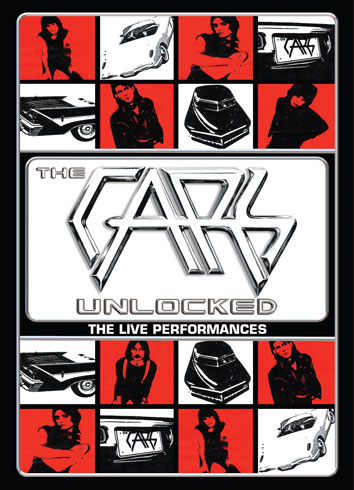
Good bad or indifferent I have put up Links to reviews for the recently released The Cars "Unlocked" DVD. In the upcoming weeks I will have my own review of the Ocasek made documentary about his former band.

Slew-O-Links :

Bullz-Eye

Full Vue Drive-In

I Miss The 80's

ExtraWack

Boston.com (Middle of Page)

Ric's Inverse Label Put On Hold


Ric's Inverse label has been put on hold because of all the recent turmoil concerning the Sanctuary Record Group ( Inverse's distributor).

Sanctuary's Chief executive Andy Taylor was fired recently because Sanctuary's 2006 projected financial losses were far greater than predicted. This has resulted in Ric's Inverse being put on what's let's hope is a small haitus. Bad news is that Ocasek has no way to distribute the Hong Kong's new album " Slow Motion Gets Around" through Inverse so the band is seeking other labels to do so.

Troub

Saturday, November 04, 2006

Brazilian Girls " Talk To La Bomb" released


New York's Brazilian Girls released their new album "Talk To The La Bomb" on September 12th. Ric was involved in the project but not as fully as we first reported. It appears Ric had produced some tracks for the CD but not all.

However, Ric did lend his guitar to the Brazilian girls sound which earned him a guitar credit in the billfold. Something I haven't seen since he played on Alan Vega's "Saturn Strip album back in the early 80's. Ric for sure produced one of the more critically acclaimed tracks on the CD entitled "Last Call"

Formely Of Ric's Inverse The Hong Kong's First Video


The Hong Kong, Ric's initial signing to his own label Inverse has recently released a song called "Tongue Tied". I suspect this is the first song from their forthcoming album " Slow Motion Gets Around" which is also produced by Ric. This is the first track to make it's way to the public. The song is fantastic and the production is outstanding.

However, according to The Hong Kong's keyboardist Shawn King because of Inverse's dilemma with Sanctuary ( read two posts up) Inverse's fate is on hold.

Because of this The Hong Kong themselves are presently shopping the new album around to other labels.

The Hong Kong's latest release "Tongue Tied" also has a video that accompanies it which has recently won the best Music Video at the Crossroads Film festival in Jackson Mississippi for both the band and its director Sera Rogacki.

The Hong Kong are great peeps and an good band to boot.

Download their first album "Rock The Faces" Here

Take a look at the Video Here.

The Hong Kong - Tongue Tied

Troub

Friday, November 03, 2006

Ric Audio Interview On Amazon.com

Ric recently gave an interview with Amazon.com discussing the time consuming effort it took to put The Cars “Unlocked” DVD together. He also discusses amongst other things the possibility of ever playing with his former band again.

Ric Amazon.com Interview

Ric Continues on Colbert Report Running Gag


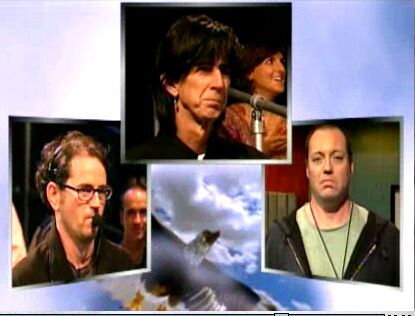
Ric recently was shown in the running gag on The Colbert's Report "Rescuing Steven Jr. The Eagle" bit. Ocasek during this latest skit is a vital member of Colbert's "Col-mando's" who have been given the task in this important eagle saving mission. Ric has been chosen because of his New Wave Rock and Muscle. Colbert also adds that Ric resembles a bird. Colbert then unveils a Ric Ocasek tracking system which reveals that Ric has strayed from the mission and is now stalking Todd Rundgren.

Ric in Col-Mando Bit


Troub

Wednesday, August 09, 2006

The Cars Unlocked To Be Released !


Christmas comes a bit early this year for Ric Ocasek fans as the much anticipated “The Cars Unlocked” documentary has been announced for release October 17th. The company distributing it is Docurama and the project was mainly put together by Ric and his son Eron. You can visit Ric Ocasek.com to actually view trailers of this soon to be released DVD.

The Cars Unlocked DVD will feature about 20 never before seen live performances and backstage footage even including sound checks. It will also include a 28 page photo lyric book put mainly together by Ric himself.

In addition if that weren’t enough to handle a 14 song music CD of Cars unreleased live material will be included. The CD will also include four never released Cars songs whether they are studio or live ones is yet to be determined.

The price of the whole package is slated at $23.96 if you pre-order from the Docurama site starting September 19th. An extraordinarily reasonable price that you know Elliot Easton and Paid Inc had no hand in setting or it would have been set at 60-80 dollars.

For much more information go to the these Docurama links. One is their website link and one is a The Cars Unlocked product pdf file link

Unlocked Docurama Link


Unlocked Product PDF LINK

Colbert Report sends Ocasek on Covert Mission


Ric made his second appearance on Comedy Centrals Colbert Report. Ric participated in a comedy bit where host Stephen Colbert’s eagle namesake Stephen Jr. was being abused by zoo handlers. Colbert called upon three special people to rescue Stephen Jr. from the clutches of his evil bird captors. One was an explosive specialist named Killer, Colbert’s expendable producer Bobby and none other than Ric who would use his brute animal magnetism to woo the female zookeeper away from Colbert’s precious bird.

To view the clip you have to go to the Comedy Central and do a search for the Colbert Report and look through the archives for a bit called “Rescuing Stephen Jr.”

Here’s a link to get you started

Rescuing Stephen Jr.

Tuesday, August 08, 2006

Pink Spiders Answer My Question at Pink Spiders.com


I want to thank the guys from The Pink Spiders taking their time out to answer my questions over at their site. Their new album Teenage Graffiti came out August 1st and I urge you to pick it up. The album has a bit of a Modern Lovers connection which diehard Ocasek Fans always know seems to pop up now and then. Jerry Harrison formerly of the Modern Lovers and Talking Heads appears as a musician on the CD. Former Cars drummer David Robinson was a member of the Modern Lovers as well. Also Ocasek is a long time friend of Modern Lovers frontman Jonathan Richman and has produced him in the past.

Here's the Question I posted to their site :

Troub : Did Ric Ocasek ever mention anything about the whole Cars/New Cars tour debacle ? Also, Ric is known for not changing much from demo to final product. Did you hook up with him because of this or for his rep as being like a extra member of the band that won't try to fawk with your sound?

The Pink Spiders : Absolutely, that was one of the really cool things about working with Ric (other than being a huge fan of the Cars). He is a lot more of a spiritual guru, zenmaster, etc than dictator in the studio. He's just really good at making your songs sound cool and getting a great performance out of you. As for the "New Cars", I have to plead the fifth


Here is the Link to their site and my question


Pink Spiders.com

June 17th Ric And Paulina sited in Greenwich Village


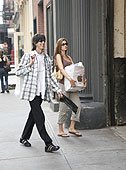
It's gotta be mega annoying to have your pics snapped every time you do anything. But Ric and Paulina seem to be taking it all in stride. The couple seem to have been shopping and it looks like Paulina is carrying the bulk of the load. It looks like Ric is driving an economy size car these days to whiz about the city. I'm just wondering how does he fit in it. There is absolutely no leg room in that car for him and his head is scraping the roof. My best guess this was taken in Greenwich village but really could have be taken in any part of NYC.

Troub

June 14th Ric and Paulina attend Adam Sandlers "Click" Premiere

Ric was out in Los Angeles with Paulina attending a Premiere for Adam Sandlers latest piece of comic predictability "Click". I wouldn't pay dime one to see this and apparently either did Ric.

From what I heard the movies concept of having a remote control for life itself was amusing for about 15 minutes and the rest of the movie was an exercise in boredom. Let's hope the after party was better than this latest Sandler Movie.

Troub


Thursday, June 22, 2006

Ocasek Beefs Up Brazilian Girls' 'Bomb'


Ric has once again undertaken a avant garde band as a production project in the eclectic techno quartet the Brazilian Girls. The fact that the band is comprised of three men and one woman who are not Brazilian can give you a hint that this is no ordinary band. Well Known in The NYC club scene for their sexy and d mysterious stage shows courtesy of lead singer Sabina Sciubba lacey party masks. Sciubbia delivers her sexy vocals in five different languages. This band has had some nice success sales wise with their self titled debut. The mix of conceptual art and music is a combination that no doubt attracted Ric to working with them as Producer for their sophmore effort.

Here is a copy of the Billboard article written by Katie Hasty

Ocasek Beefs Up Brazilian Girls' 'Bomb'

Eclectic New York outfit the Brazilian Girls get a lift from producer Ric Ocasek on its sophomore album, "Talk to La Bomb." The set is due Sept. 12 via Verve Forecast and is the follow-up to the group's 2005 self-titled debut, which reached No. 6 on Billboard's Top Electronic Albums chart.

"This record is going to be a lot more dynamic," bassist Jesse Murphy tells Billboard.com. "We really captured the lounge aspect of our music with our last one -- you could hear it in a restaurant but not even know it was us. I think because we had so many people around to bounce ideas off of, the songs just got bigger and better."

In addition to producing, Ocasek plays guitar on the first single, "Last Call." Says Murphy, "That was one of the songs we were feeling really iffy on. We kept trying to make it work and were going to just let it die, but then Ric took it and worked it out."

Wednesday, May 17, 2006

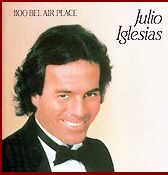
Ric Takes Julio Iglesias To Court !

Ric isn’t really suing Julio but maybe he should.

Recently, I came a cross this review of a Julio Iglesias song named “Ni Te Tengo Ni Te Olvido”. The reviewer said it sounded like something Ric Ocasek wrote but the author wasn’t more specific than that.

After I obtained the song and took a listen it is a complete and utter rip-off of the Ocasek penned CARS song Drive. Although the chorus is different the verse part is almost exact.

How bout you noisicians download it and you can be the judge for yourselves ?

We here at Negative Theater are all about justice. Decide for yourself if Julio Iglesias is indeed guilty of ripping off an Ocasek melody?


Provided below is the Link For the song.

“Ni Te Tengo Ni Te Olvido”

Tuesday, May 16, 2006

Ric And Paulina Celebrate Anniversary


CRAFT RESTAURANT

Ric and Paulina celebrated their anniversary
meeting of each other on May 2, 2006.

The people at Gawker Stalker are reporting that they saw the couple dining out at one of New York's newest top rated restaurants.

The restaurant which is called Craft and located on 43 E and 19th in NYC has recently been featured on Bravo networks "America's Top Chef" reality series. As a matter of fact it's Craft's owner Tom Colicchio is one of the judges on the show.

The following is what Gawker Stalker reported:

Seated next to Ric Ocasek and Paulina Porizkova at Craft tonight, celebrating their 22nd (!!!) anniversary. Both are astoundingly tall, he still has the same shock of black hair, & thin, white face. She looks about 32, super long hair and Mt. Rushmore cheekbones. They were warm and friendly & disappeared for a smoke about halfway through.


Tuesday, May 02, 2006

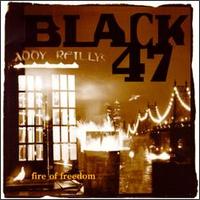
Black 47 With Ric As Their Producer

One of Ric’s earliest post-Cars production projects was his involvement with NYC’s most famous Irish Pub band Black 47. Ric produced two of their albums in the early 1990’s. He was at the soundboard for both their critically acclaimed “Independent” album in 1991 and their 1993 effort “Fire Of Freedom”

Ric also lent his guitar and keyboard talents to the ‘Fire of Freedom” project as well as his vocals. Ric is soley responsible for the opening keyboard work on the Black 47 song “Fanatic Heart“.

Some familiar names of Ric’s post cars posse were also involved. Ric’s long time friend and techy David Heglmeier was the engineer for the album as well as his old pal Darryl Jennifer (bass Player for the Bad Brains) who contributed his bass playing as well as spoken word to the “Fire Of Freedom” album. Jennifer also has appeared on two of Ric’s solo albums Beatitude and Nexterday.

Below is an article on how Ric and the members of Black 47 got along during the recording for “Fight For Freedom” how things evolved and how Black 47 felt about working with Ric.

We used to play the Wetlands in NYC quite often. Famous People would watch us play. Joe Strummer came in often to see us, so did Matt Dillon as well as Sinead O’Connor. One day, Murad and Judy showed up. Judy was the sister of Elliot Roberts who had apparently managed everyone from Jesus on down. Elliot was, at this time, looking after Neil Young, Tracy Chapman and Ric Ocasek. He was based in LA but offered to manage us - with Murad and Judy handling things in New York. Soon after, while on stage in Reilly's, I noticed a commotion in the crowd. It was hard not to take note of Ric Ocasek. Tall, deathly pale and intense. However, when I joined him for a drink I was stunned to see that no one was paying any attention to him but to the leggy blonde on his arm. Where had I been? I had never heard of Paulina, his wife and world famous model.

Still, it made things easier to have a one on one with Ric. After a few compliments about the band and the information that the Cars had started in a similar dive in Boston, he got down to business. "I can make that independent cd of yours great." That sounded intriguing, especially coming from someone who had sold 30 million records. "The problem is, I'm going away in a couple of weeks. If we're going to do this we've got to start right away. Think about it." Then Paulina turned to him, he melted into her arms (who wouldn't) and we got up to do our next set.

The next morning, Elliot was on the phone. "Well?" Says he, "do you want to do the CD with Ric?" I wasn't sure but then thought, "what the hell." We started later that night. It was a great experience - at least, for me. Ric was one of the most intelligent, insightful people I have ever met. In the public eye, he has been painted into a corner by his enormous success with the Cars. But to me, he is a true artist - very inquisitive, a vast sensitivity and, despite or on account of all his success, thoroughly unafraid to fail. He was an amazing blend of humility, artistry and self-confidence, and then on top of all that, he was a real rock 'n roll star, in the flesh - with all the good and bad that bestows.

His style of producing was to let you make the record, sit back on the couch and listen. And what ears he had. His studio was set in the basement of his town house in the Gramercy area. He rarely began recording before 5pm and would continue well into the dawn and long after I had crept home, bamboozled with sound. Whenever you faltered, he would make a suggestion, invariably right. Oftentimes, he would disappear upstairs with Paulina and leave you with his engineer and assistant, Heg. He had an uncanny knack for knowing when things weren't right and he believed that records should be made with the minimum fuss. Probably his long years of trauma making records with Mutt Lange confirmed him in this. After my departure at 4 or 5 am, he would work on. The next afternoon when I showed up, bright and bushy tailed, I would insist that Heg let me hear anything Ric had been messing with.

Thus was born the beautiful intro to Fanatic Heart on Fire of Freedom which he created with a Roland guitar synthesizer. Compare it with the more bare bones but still moving version on the independent cd - two ways of seeing things, each equally valid. Two snippets that he was about to discard were the pieces of Livin' in America which later became Fordham Road 8am and Bainbridge Avenue 2am. Whenever, he heard me do anything that sounded vaguely like the Cars he would beg me not to use it. "I'll be criticized for that," he would say. I told him to quit the paranoia! But he was right . Critics hated him and blamed him for a number of my ideas. (One moron who writes for the NY Press even chastised him for the production of Black 47 Independent). He took it all stolidly. Such was the price of fame - perhaps, if you're married to a super model, have a lot of money, fame and success, these things don't matter - I wonder?) Still, hanging out with him was a lesson in life and I remember the time with great affection.

But back to the recording. We worked and remixed many of the songs from the independent cd and added, Fire of Freedom, Maria's Wedding, Our Lady of the Bronx and New York, NY 10009. But time was catching up with us and Ric had a departure date. Sometimes we worked separately, in two studios, to get more done. He had such a clear idea of where a song should go. I had been agonizing with John Goldberger, the engineer, about the mix of Maria's Wedding. Ric swept in, an almost spectral figure and demanded the mix. When we told him our problems, he merely said "play it!" And while we listened back, he moved 3 or 4 different faders. By the time the song had finished, to our amazement and hurt pride, a new mix had been created. Without a word, he swept out of the studio, leaving us there staring at each other.

But it was a two way street with Ric. He loved our band dearly and delighted to be inspired himself. One of my most vivid memories is making the cries and screams for the intro to the Famine song, Black 47. I used, perhaps, six tracks to get those sounds, layering them and always keeping in mind the millions who had died. Before doing a track, I would sit in his little vocal booth and summon up the spirits of those dead and discarded people. Track after track, I screamed, cried and moaned and each time I emerged, I would look at him. He would just stare back. Eventually, after losing all sense of time, he nodded. It was done and the three of us listened back wordlessly. He was a wonderful illustrator and always drew as he listened. When he left the room I snuck a look at his book. The page was empty.

That recording and mixing went by in a blur and, as usual, we continued to do gigs. One of which was an outrageously rowdy affair in Sam Maguires - that wonderful bucket of blood in the North Bronx. I remember rushing back downtown to the Record Plant where I had left John Goldberger mixing James Connolly. My ears were bleeding from Sam's and yet Connolly sounded magnificent - all the instruments blended together like some amazing fife and drum band. I heard Connolly on a compilation tape recently. It still sounds great. But all good things come to an end: Ric flew off to the Caribbean, Pete Ganbarg signed the band and so I brought the finished tapes up to EMI.

Monday, May 01, 2006

NY Times On Ocasek's Production Work With Le Tigre

This is a NY Times Piece that appeared in the paper in 2004. It is very telling on what kind of a person Ocasek is and what people think of him as a producer.


RIC OCASEK hasn't changed much since the mid-1980's, when his band, the Cars, was last a fixture on MTV. He remains rock-'n'-roll thin, his long legs still clad in dark stovepipe pants, and while the lines in his angular face are a little deeper, he continues to sport the same instantly recognizable shock of black hair. But during the last 20 years, as the Cars' elegantly sardonic take on commercial pop music has receded into the realm of VH1 specials and 100-best lists, Mr. Ocasek has slowly reinvented himself as a producer and mentor to musicians who are often half his age.

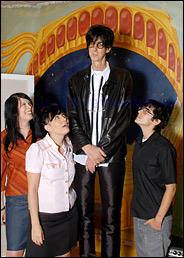
He has produced material for bands as wildly diverse as the geek-chic Weezer; the glamorous ska-influenced No Doubt; Courtney Love's punk-girl group, Hole; the proudly low-fidelity Guided by Voices; and now the raucous, gender-bending art-punkettes Le Tigre, who are releasing one of the most highly anticipated albums of the season, "This Island" (Strummer/Universal).

Rooted in the angrily feminist, musically innovative Riot Grrrl movement of the early 1990's, the New York-based group - Johanna Fateman, JD Samson and the former Bikini Kill singer Kathleen Hanna - built its reputation with high-energy live shows and two self-produced albums that combined catchy samples of 60's girl groups, strident guitars and radical gender politics. (Le Tigre's Web site states that "the music is not separate from our political ideas, and we really can't choose one or the other.") True to the do-it-yourself punk credo, the group had never worked with a producer, choosing instead to compose, record and arrange its CD's itself. But when the Le Tigre bandmates wanted to do something "crazy pop," as they put it, for a third album, they decided to call on professional help. Mr. Ocasek had met the group in 2003, during a stint as a vice president of Elektra, and the band admired Mr. Ocasek's "raw musical aesthetics," as Ms. Samson said, and his work with the smooth, radio-oriented No Doubt.

Mr. Ocasek ended up working on three tracks, with one, "Tell You Now," making it to Le Tigre's new album. (For the record, he had nothing to do with Le Tigre's raucous cover of the Pointer Sisters' early-80's hit "I'm So Excited.") He concentrated on making their songs more radio-friendly while preserving their homespun sound.

"It was really new for us to have so much appreciation for somebody else's opinion in the studio," Ms. Samson said, laughing. "He said that 'Tell You Now' didn't really have a chorus, so we had to figure out what the most catchy part was, flesh it out and piece it back in. We had never even thought of song structure before."

Told of Ms. Samson's remarks, the soft-spoken Mr. Ocasek let out a chuckle, and commented, "I told them that if you want to get something on the radio, people have to get knocked over the head with something they can sing along to. And if you never have a melody to follow. ...''

Producing began as a side venture for Mr. Ocasek. During the Cars' chief hit-making years, from 1978 to 1984, Mr. Ocasek left the hit-making to experts like Roy Thomas Baker, the Englishman responsible for Queen's "Bohemian Rhapsody." But at the same time Mr. Ocasek was quietly offering his services to others. "I started producing mostly out of love of being in the studio and also because I wanted bands to feel like they were going to get exactly what they wanted without anybody pushing them around," he said. (Today he often works out of a studio he set up in his house in Manhattan, near Gramercy Park.) Among the first musicians he worked with were the gonzo art-punks in the Fast and the intense, pioneering electronic duo Suicide.

Though the Suicide singer Alan Vega is known for his intense, haunted stage manner, he speaks about Mr. Ocasek (with whom he has also collaborated on the spoken-word CD "Getchertiktz'' in 1996) in reverent terms. "When I work with him, I know I'm in God's hands," he said. "I remember him working over and over again on backup vocals for a D Generation song I personally wasn't crazy about. So I got impatient and walked out. When I came back two hours later, it sounded amazing! He worked on those vocals until he nailed them."

Mr. Ocasek's low-key, "I used to be in your shoes'' approach seems to inspire trust in his bands. It also helps that he is usually hired by the band, not foisted on it by a record label, as some producers are. "All the bands I produce are real about their music: it's artful, it has integrity," he said. His acts range from the uncompromising hard-core Bad Brains to the quirky, literate Nada Surf and the Celtic rockers Black 47, and several have found huge, Cars-level success: he worked on Weezer's two self-titled albums, both platinum-selling, and co-produced a pair of tracks on No Doubt's hugely popular 2002 release, "Rock Steady.'' To bolster that band's "Don't Let Me Down," for instance, he used the same kind of catchy synthesizer counterpoint that made the Cars' "Just What I Needed" so instantly memorable. (That 1978 hit is now gracing commercials for the consumer electronics chain Circuit City; Mr. Ocasek, who once sang acidly of "TV ads that sell erections," was recently persuaded by his former bandmates to give in to the siren cries of advertising agencies.)

Perhaps oddly for a man who barely showed up at the office during his year at Elektra, Mr. Ocasek finds himself dispensing tips on corporate politics, along with recording advice. "I felt that bands were naïve about the business," he said. "I'd offer suggestions, like, 'You could give your publishing rights away to the record company for $100,000 now, or you could keep them and take a chance on yourself, and you'll be very happy if you do that.' I gave Weezer advice on what it would be like when they were successful and had to deal with record companiesagents, managers." At the same time, he pointed out that bands had gotten more savvy over the last decade, noting that "the indie community is well aware of the corporate community's tricks."

"Some labels," he added, "are actually quite fair and quite good, but I think bands also have a much better idea of what's going on than ever before."

Mr. Ocasek's own experience as a corporate insider was brief but happy, he said. (He signed only one band: San Francisco's neo-psychedelic Stratford 4.) Mr. Ocasek quit Elektra when Sylvia Rhone, the label's chief executive, who had hired him, left after a bout of corporate restructuring. "I realized I'd be better off having my own record company anyway," he said. His as-yet-unnamed label's first release, scheduled for February, will be a solo album titled "Nexterday"; he is even considering live dates to promote it, though he's quick to add that "as an artist who's already been around, I have no aspiration to re-enter the pop world." He may also put out the Stratford 4 CD that's been stuck in limbo in the wake of the Elektra shake-up. "I want my label to be one of the most adventurous ones around," he said. "I look for what a band has to offer, not for something I want to change."

It's a remarkably self-effacing attitude, and one that seems to inspire awe in Mr. Ocasek's charges. "He's been the same dude the whole time," Ms. Samson said. "He's not cocky - he just thinks he happened to be in a band that became really popular and he was having a good time!" Ms. Samson added that she and Ms. Fateman were at a gay march in the summer, "and there were thousands of lesbians walking on Fifth Avenue."

"He was crossing the street," she recalled, "and he came out and picked up Johanna and whirled her around. It was totally surreal - but that's just Ric for you." For a moment, Ms. Samson, who dresses androgynously and sings along to lyrics about a "huge strong mass of feminist fury," sounds like a dreamy-voiced teenager who's just had an encounter with a rock star.

Download The Ocasek Produced Le Tigre track "Tell You Now" here


Thursday, April 27, 2006

Ric On Comedy Centrals Colbert Report

Ric made a stop by Comedy Centrals "Colbert Report" Show on April 20th. Ocasek appearance was a two fold affair. During a comedy bit in which he played the resident expert on walking on water (The Magic video) Ric told Colbert that walking on water could be done in the sun debunking a book by paleontologists Colbert was satirizing that said Jesus had walked on ice.

Colbert then put these paleontologists on his vaunted " On Notice" List. He then turned to Ric and asked him if he had anyone he wanted to put on notice. Ric replied "Todd Rundgren" and put his name in the slot, which made the audience break out into laughter.

Below is the Link for the Video Clip in It's entirety.

Ric On Colbert Report

Troub

Thursday, March 23, 2006

Ric On Sirius Radio March 23rd Midnight


Ric Ocasek will be Interviewed by Richard Blade on Sirius Sattelites Radio's " First Wave" Music station channel 22.

Don't fret if you haven't got Sirius. You can get a free 3 day online audio stream of the broadcast if you act quickly and sign up. No fees or credit card required. It's EZ-Squeezy. The Rebroadcast of the interview will be aired Midnight March 23rd ! That's Tonight !

Just Go To Sirius.com for the free 3 day online Trial

GO GO GO !

troub

Ric Turns 57 March 23rd !


A most Happy Birthday is wished for the Godfather Of New Wave Ric Ocasek. Ric Turns 57.

Now if we can get this goofy bastard to stop smoking like a fiend so we can ensure we celebrate his birthday's until 2036 or higher.


-- troub

Wednesday, March 15, 2006

Ric's Right Hand Man Greg Hawkes Musician Magazine 1984


I firmly believe that if Ric Ocasek had not met Greg Hawkes, Ric's songs would not have reached the heights that they do.


Without Hawkes musical contributions to Ocasek penned tunes the final product ultimately would have suffered.


Hawkes as stated by Ric on many occasions gives an emotion or musical intangibility to an Ocasek written tune that even Ric couldn't muster himself. Hawkes is always a phone call a way (or used to be ) when Ric needed him and Hawkes always obliged. He has co-written with Ocasek on Cars material as well as Ric's individual efforts.

The following article is from Musician magazine that talks about their relationship as collaboraters as well as the recording sessions of Heartbeat City.

Written By J. D Considine "The Cars Take Another Hairpin Curve" 1984

"When you get tired of fitting in, then you'll be what you are."

Ric Ocasek, Greg Hawkes and I are sitting in a small lounge downstairs at the Cars' Syncro Sound Studios in Boston. At one end of the room a television glows soundlessly as a house fire wreaks havoc on one of the soaps; upstairs, an unnamed band hammers stoically through its second hour of drum check. Just another day in the music business.

The topic at the moment is Songs We Like, with Van Halen's "Jump" the current focus of discussion. Perhaps surprisingly, perhaps not, both Hawkes and Ocasek like it. "A good song is a good song," Ocasek shrugs by way of explanation. I agree, but add that not everybody hears things so fairly. To some people, "Jump" isn't a good song, it's a Van Halen song, and Van Halen shouldn't be too lavishly praised because, well....

"Because it's not cool?" Ocasek asks, with a tinge of sarcasm. "Who cares! I like anybody who does something good.

"There are a lot of elitists who feel that if you like what the masses like, it's uncool," he continues from behind his dark glasses. 'I think the best thing you could possibly be is uncool. When you get tired of fitting in, then you'll be what you are.

"Be what you are" is something of a Cars by-law. In the roughly six years since the band first burst forth from the Boston club scene with an eponymous debut album and two top-forty hits, "Just What I Needed" and "My Best Friend's Girl," the Cars have been a band in a category by itself. On the one hand, the Cars' songwriter, Rio Ocasek, wrote songs that were as self-conscious, alienated and emotionally distanced as anything washed ashore by rock's new wave. These were dressed up by his band mates- keyboardist Greg Hawkes, bassist Ben Orr, guitarist Elliot Easton and drummer David Robinson-in an array of blank rhythms, quirky textures and angular hooks. Yet on the other hand, this pointedly avant-pop approach was quickly embraced by fans and radio alike, and sold like hotcakes while other new wavers remained buried underground.

As a result, the band has been seen as the product of extremes. we've been written up a lot for having a duality," says Hawkes, the pop band on one side and the arty band' on the other.' Though it's true that the cars' singular sound can easily be broken into two separate parts, it would be a mistake to claim that the band's sound and success is simply a matter of formula. After all, there have been plenty of other bands that have exhibited similar characteristics with far less success, from the early days of Roxy Music to the current struggle of XTC.

You might even go so far as to wonder if the cars' avoidance of formula is part of the reason they've done so well. Ocasek does. During the Songs We Like symposium, I asked him what songs by other people he liked to play when he was starting out, and he answered, "I never did that. I've played maybe two covers in my life. Three. which I think is an advantage. I never really learned other people's songs, and never really learned those forms. I sometimes wonder if that's not the reason the stuff I do is not reminiscent of those things...

Still, there is a cars sound, and even if you can't categorize t or pinpoint its lineage, it's easy enough to identify. Hawkes: There are little specific things that are cars trademarks, like the clicky guitar eighths with a few quirky synthesizer lines around them and a fairly straight rock beat To me, that is the cars sound. Some of the vocal mannerisms seem like trace-mark touches, too. Even the way the background vocals are recorded, with a kind of multi-tracked sound so they're not way up front, but are still kind of thick."

A good description, and one which is instantly shattered upon hearing Heartbeat City, the latest Cars album. From me flanged smear given the opening vocals in 'Hello Again" to the warm blanket of synths wrapped around Ben Orr's croon in Drive ,"it's clear that this is not the strangeness with which we have become so familiar. Some, like 'Drive" and 'Why Can't I Have You," seem to have been softened for the mainstream market of housewives and Hot Hits; others, like "Magic" or It's Not The Night," sound like they've been beefed up to make the qualifying weight for AOR muscle-band fans. By the third or fourth listening, you can pick out many of the familiar devices, but only after you've realized where to look for them, because for the most part, Heartbeat City downplays individual quirks to go for a more unified, wholly integrated sound.

"It seems like a natural progression," says Hawkes of the difference between the stereotypical Cars sound and that of the new album. "Yeah, I think it was just the next logical step," agrees Ocasek. 'Those songs were the ones we did, and the way it worked out was the way it came out. There was definitely no attempt to do it in a different style."

But what's so natural and logical about an album that sounds so different? Why, the fact that it sounds different, of course. Consider the confusion over exactly where the band sits in the rock world. If the Cars were totally predictable, it would be much easier to slide them into a convenient pigeonhole. Therefore, once the band has established the basics of a sound-the clicking guitar and quirky synthesizer Hawkes describe-the next step would be to walk away from it, so that the audience is thrown off balance. Just as they were when they heard the first album.

You go through and you make all kinds of records," Ocasek says. This is the fifth Cars album; it should have a different sound than the fourth record. That's really the crux of the thing. It's not like any prior Cars album. It doesn't sound like one. With time, it's going to sound like a Cars record, because the vocals are the same. But in a sense, it's a change. And change is always good."

The way you change is also a consideration, of course, and the fact that the Cars hired a very mainstream producer, John "Mutt" Lange of AC/DC fame, is in its own way more surprising than if the band had turned in a hair-raisingly avant-garde effort. "It would be easy to make a record that nobody would like," Ocasek muses That's not very difficult. I could make a record for the critics, or I could make a record for 10,000 people The point is whether that's the real reason you're doing it.

Besides, argues Hawkes, the seeming conservatism of Heartbreak City is just another swing of the band's internal pendulum. He explains. Up until this particular album, I've always felt proudest of Panorama. I think that was our most adventurous, as far as doing whatever we wanted. Not that we don't do what we want on the other records, but Panorama seemed to be the one that swung to the left the most. I guess this recoin is really just a swing in the other direction."

"We were using Mutt for pretty much the same reason, adds Ocasek We wanted a change. We could have produced it ourselves if we wanted to. But as a sound person, I really like Mutts sound. I thought that the combination of the sound he gets and what we do would mingle pretty nicely. Mutt's never done a Band like us; he's done a lot of heavy metal But I thought the two could mix.

Indeed they did, out not in the way one might have expected. Certainly there's a lot of Mutt Lange in the beefy crunch of Magic" and the crisp shifts in dynamics that spur It's Not The Night. Out that's largely a function of his way with guitar sounds, and there really isn't much guitar on the album, Strangely enough.' says Hawkes, 'part of that was working with Mutt i say strangely because you would expect that for a producer with his background there would be more guitar and less synthesizer But I think Mutt was really intrigued with working with Keyboards a lot. I think it was a way for him to do something different."

In making Heartbeat City, the operative phrase was "working with keyboards a lot." Among the many gadgets on hand at Battery Studios n London, where the album was recorded, was a Fairlight Computer Musical Instrument, which the band decided to use on the new album. Why? "To learn about it," shrugs Ocasek. Because your parameters are widened by what you can do with it, soundwise and on almost any level of playing. Because it's here today and is there to be used if you want to use it. It's just another instrument. We just chose on this record to get very involved with it."

'Very involved" is an understatement. It took Greg Hawkes, Andy Topeka and David Robinson a month just to learn how to use the thing. And use it they did-" maybe between seventy and eighty percent of the keyboard parts are programmed on the computer" says Hawkes. "But you've got to realize that it might take eight hours of preparation on one part, programming it a certain way. Then maybe it sounds stiff, so you have to try programming it in a different way. You really do have to work with the typewriter as far as entering the various functions and parameters goes. It's not easy to change a sound, as with the twist of a knob-and I'm used to twisting knobs."

But once it's all in there, playing it back is just a matter of pushing a button, right? Nope. "It's kind of misleading to say that once you have it in the computer you can get it with one take," replies Hawkes. "Because you might spend literally hours playing around with the sound and all the other parameters before you actually turn on the tape."

Aside from making more work for Hawkes, the use of computers didn't really change the songs on Heartbreak City, lust the way they sounded. "The only thing I'm concerned about is the feel of everything," says Ocasek. "The sound is important as well, but you can try sounds and more sounds until you find exactly what you want. The real momentum is in your feel, as opposed to the technology part of it. Technology is just a byproduct, something that, if you want to use it, you can use it."

The process begins with Ocasek's writing. "The songs are written first, written for the most part on a cassette recorder or on an B-track. I put everything down live, and it usually takes me about a night to do one. But it obviously depends on the song.

'Then, to reproduce the song in a studio situation, it's just a matter of finding the basic elements of a song, and using that as a guideline. The arrangements are basically on the demo, and between Greg and myself and the band-whoever is in the rehearsal situation before recording-we work it out. We might move things around a little bit, embellish things more, because those are rough tapes. But the song is already there, so that one could refer to it all the time, as to what it will ultimately sort of sound like."

"Ric writes the songs, which generally consist of the basic structure, all lyrics and sometimes that's all it consists of," elaborates Hawkes Sometimes it consists of a complete arrangement, with all the keyboard melodies and background parts. On this particular record, most of the songs went through at least one or two complete changes.

"This is how it would happen: Mutt would suggest something, and I'll come up with my own little variation, and maybe Rip will be out in the other room hearing all this, and will come into the control room with another suggestion. There was a lot of playing around with arrangements on this one.

All that effort wasn't simply a matter of getting the right gloss finish on the album, however. It was to get the right sense o~ guts. "Mutt's a definite stickler for feel," says Ocasek. "He'd sit there with somebody for hours working on a part, and only looking for the feel. If he didn't hear the feel, it wasn't down on tape.

'Writing's different than recording. When I'd write it, the feel was all there Mutt would always refer to the demos and say, 'You've got to have the feel of this,' or, 'This doesn't have the feel of the demo-do it again.' That's the point of creativity, it's always trying to get that feel. Because the demos, when they've got it, just naturally work, whether they're out of time or not, no matter where they sit. They just work, because they're done quickly and at the point of inspiration, You have to marry the feel to the technology to get it right."

Unfortunately, that's much easier said than done, particularly when dealing with the level of automation the Fairlight CMI entails. People are fallible, and unlike computers, don't always land each note smack in the middle of the beat, That's what makes so much music feel human. That's also what makes programming for feel hell on the programmer,

"We spent quite a bit of time moving some of these parts around in literally milliseconds-a little ahead, a little behind the beat-until it felt right," reports Hawkes with what sounds like a mixture of weariness and pride. "That was really how small the units we were working in were. Sometimes, when we put down a part, if it read out mathematically correct, it did feel wrong. It would feel slow, or maybe there was a characteristic of the sound that would make the part feel late. So we would spend quite a lot of time advancing things in very small steps, or delaying them in very small steps, until the flow was right."

By now, perhaps you've noticed that, as with the way their music is perceived, there's something of a duality between the way Ocasek and Hawkes work, Ocasek with his quickly conceived demos and Hawkes with his patient piecework. One lauds his demos because "they just naturally work, whether they're out of time or not," the other argues that "I like working with drum machines better than working without 'em." Even their appearances seem poles apart, with Ocasek's lanky height forever draped in black to artistic effect while Hawkes remains an average-looking fellow dressed in neutral colors and possessed of the sort of demeanor generally reserved for math whizzes.

On the other hand, all that may be smoke, for Ocasek and Hawkes seem at times little more than the opposite sides of the same coin. Towards the end of the interview, Hawkes is summing up his sense of the band, following my suggestion that the secret of the Cars is that they are five musicians with an avant-garde sensibility but pop tastes.

"Yeah," he says, "we really, as a band, try not to take things too seriously. I think if you actually meet the people in the band, you get the sense of playfulness that certain writers don't seem to have found yet. Because they haven't seen that, they see the Cars as a very serious, very calculated, very thought-out enterprise. Which is really not the case. We're spontaneous, but structured at the same time."

Sort of humor with discipline?

Ocasek answers by tossing a paper airplane from across the room.

"That shows you what I mean," says Hawkes. "I'm sure he was planning that all day...."


Gear used on Heartbeat City Album ...

Ric Ocasek is a Gibson guitar man, playing mostly a '55 Les Paul Jr or an SG. Occasionally, he'll switch to a Fender guitar, usually his pink Jazzmaster. All are sent through Marshall amps with a minimum of treatment.

At home, he uses a LinnDrum supplemented by 'a lot of cheap drum machines, which I love. I even have an old Hammond organ that has the 'Mersey Beat' on it." His keyboards are Prophet synthesizers, the Roland Jupiter B and the Memorymoog. He tapes. onto an 80M TEAC, through a Sound Workshops board with outboard processing gear that includes Roland Space Echoes, Even tide harmonizers, Marshall time modulators and the Lexicon 224 delay.

Elliot Easton own Scholz Rockmans.

Greg Hawkes Both Greg and Ric used the Fairlight CMI extensively on Heartbeat City, but also used the Roland Jupiter B and Vocoder, the Memorymoog, the Yamaha DX7 and DX9, the Mini-Korg, a Prophet 5 and a PPG 3.2 Wave synthesizer.