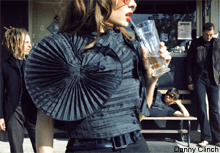
Here's the downloadable edited Interview Ric had with a very knowledgeable Leonard Lopate on Public radio's WNYC.
WNYC Interview
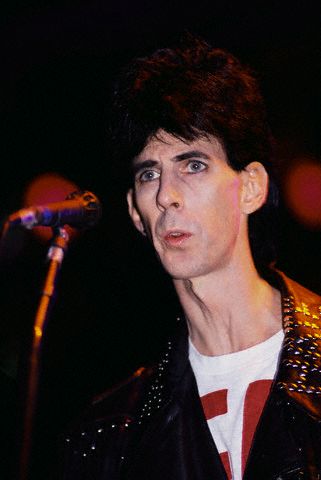
 The late great rock promoter has recently unlocked the vaults containing his treasure chest of archived audio shows. There are a couple hundred of live shows to choose from but two which should concern Ocasek fans. The first one is a performance that originally aired on the syndicated show "Rock and Roll Tonight" it featured songs from Ric's first solo album Beatitude. It was recorded live at Perkins Palace in California. Ric's three man band consisted of himself, Greg Hawkes (Keyboards,Drum program) and Casey Lindstrom (lead guitar)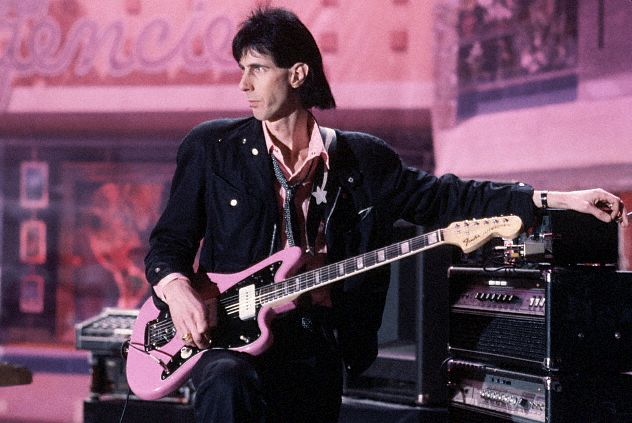
 What's Ric Listening To these days ?
White Mice
“Muzik” (Basic Replay) is a reggae record. I don’t know much about White Mice; I went to Other Music and bought a bunch of records. It was the cover; the guy on the cover looks about 10. The reggae is beautiful, really well done. There’s hardly any info on the record, no liner notes, nothing about him. When I got it, I thought, Oh God, this is really great. Reggae is one of my favorite kinds of music; I never get tired of that beat on three. I think he’s breaking ground. On the cover he looks like he is. He doesn’t have any dreads, he’s got a bow tie on.
Keane
I love “Under the Iron Sea” (Interscope). Tom Chaplin’s voice is really beautiful. They don’t sound like any other band out there, and they’re consistent. I saw them perform live once, and they were just completely real about it; there was no fake show. The guy could really pull off the vocals. He sings some stuff in falsetto. I really like the song “Atlantic”: it’s a catchy pop song — could be a hit — but it still has integrity. It’s not schlock pop.
Dead Moon
“Echoes of the Past” (Sub Pop) is a compilation record; it’s got 50 songs on it. It’s a band hardly anybody knows about. Every song sounds the same, kind of like the ’60s band the Seeds. It’s a band that will never be commercial, never see the light of day in that sense, but it does have a devout following. It’s almost like Robert Plant singing, but it’s kind of straight-out old rock ’n’ roll riffs. It’s kind of raw, but I really like it.
Albert Hammond Jr.
He’s the guitar player from the Strokes. He writes phenomenal songs. I was really shocked another member of the band could write as well as that. I heard snippets of “Yours to Keep” (Rough Trade) before it was out, but once it came out, I was really pleased with what he did. It looks like Albert has a future making records. It was arranged really well.
Bad Brains
This is from 1982. It’s real raw. That band is probably the No. 1 punk band in the world. They probably influenced every punk band there is. There’s not a lot of footage of them at all; they were hard to pin down. As the years went on H. R., the lead singer, got hard to deal with. He wouldn’t do the hardcore stuff anymore, he started to get crazy, he wanted to stick with the reggae. But when he did do the hardcore stuff, there was no one who could even come close. There wasn’t much you could see; even if you went on YouTube, you wouldn’t see much. But “Bad Brains Live at CBGB 1982” (Music Video Distributors) is the real deal; its really what the Bad Brains were like. This is a phenomenal thing to have out.
The Ramones
The Ramones DVD “Raw” (Image Entertainment) is really comprehensive, far more comprehensive than “The Cars Unlocked.” It’s more of a traditional documentary. If you really wonder what the Ramones were all about over the years, if you’re a Ramones fan or even if you’re not, it’s phenomenal video. I liked every bit of it. It’s fun to see all the Phil Spector stuff. You heard stories, like Phil Spector had a gun in the studio, and you didn’t know if he did, but you watch it, and you find out he did. It’s a great retrospective of them.
Peter, Bjorn and John
The songs are great — the arrangements and the general vocals. It sounds a bit British. The chord structures are slightly different: they don’t play a C chord like everyone else. A lot of British bands use a different chord structure. They may learn to play things on the guitar different. It’s a hard thing to pinpoint. The album’s called “Writer’s Block” (Wichita), which I never understood because I never had it. I never put that pressure on myself. I always have stuff to write.
 The following couple of excerpts are from an interview with former Weezer band member and Rental frontman Matt Sharp taken from a recent interview he had with Chartattack.com . The complete article is linked following the excerpts concerning Ric and Paulina.
 By Mark Brown, Rocky Mountain News
While Elliot Easton and Greg Hawkes tour as the New Cars with Todd Rundgren on lead vocals, Cars founder Ric Ocasek has spent his time making the ultimate home movie.
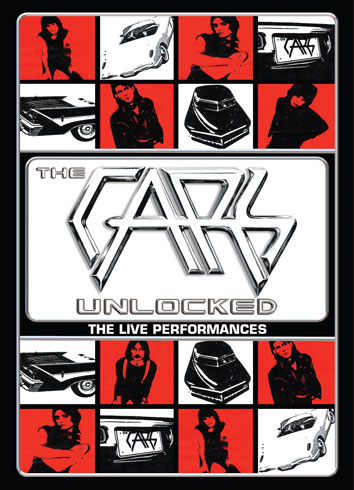
Digging through years of privately shot video, Ocasek has put together The Cars Unlocked - The Live Performances, a DVD full of live music and behind-the-scenes footage.
"I thought it would be interesting for people to see," the reclusive Ocasek says from his New York home. "We weren't too vocal about a lot of stuff, which was intentional on my part, because I wanted to preserve some mystery."
The Cars Unlocked has that, with lots of home footage mixed with feeds taken off the big-screen system at certain concerts.
There were no overdubs, with all live music. "I didn't have much choice. I didn't have any 24-track tapes to mix from," Ocasek says.
It's a tribute to the original band, with drummer David Robinson and the late Benjamin Orr, who co-founded the band with Ocasek, well-represented.
AND THEY'RE OFF!
• On the first album's signature guitar sound: "I only had one amp and one guitar. I think Elliott had one guitar and one amp. The other thing was, Roy Baker was a really great engineer. The first album was an album we did in 12 days and barely had time to learn anything. It was just very quick. I'm sure he close-miked, but I know he set mikes in the room as well. He was very into ambient sound."
SLEEK DESIGN
• "David (Robinson) did all the (Cars album) covers. He did collages for them that were re-photographed. This was way before PhotoShop where you'd have to do things by hand. In the beginning, I remember talking about wearing black and white onstage because it was easy to find. People started noticing, so we kept doing that, then brought red in to the picture. It was all part of a visual thing."
ROAD TRIP
• "Some tours were long, especially the first two, maybe eight months out of the year, Europe included. Then tours started to get a little more reasonable mentally. They were around four months long. That was mostly for sanity reasons, at least for me personally. I had to write the albums, too, so I had to have some time. The first two were really great fun. But then it became a little redundant."
STEP AWAY FROM THE CARS!
• Approve of the New Cars? Disapprove? "It's somewhere in the middle." But honestly, wouldn't you have liked to tour? "I have this reputation for not liking to tour, and I can't say I do love it. I certainly didn't want to do a reunion tour. There were different factors why I didn't want to do that. I don't feel like I need to be revived. I've got things to do."
DIFFERENT TRACKS
• "If I'm not producing, I'm writing albums, and if I'm not doing that, I'm doing artwork or something. I think some people were born to perform. Some people are better performers than they are songwriters or musicians. Once I saw the world and once I understood the reaction that was always going to be there, it was not as gratifying for me anymore."
WHY? WHY? WHY?
• "I've been doing this (DVD) project for a few years now, off and on. I wanted it to be there because I work with a lot of new bands and they'd say: 'I've never even seen The Cars. I love your music, but I wasn't born yet. I wish I could have seen it.' I always had that in the back of my mind - what about people who have never seen The Cars?"
ROAD GEAR
• "I always use a Les Paul SG. The one I primarily use is from 1962. I bought it on the road once. The first guitar I ever had was an SG, and I had it painted and it had pinstripes on it. That's the one I used on the first album, the whole album. That was before I changed guitars. That would be the one I would grab if there was a fire."
Here's The Link : Rocky Mountain News
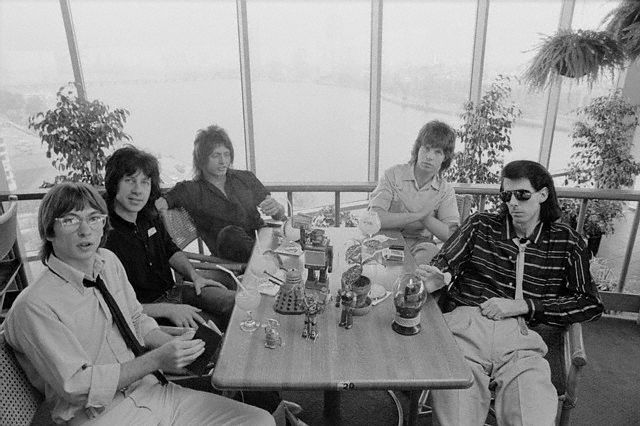
For the past several years, The Cars' frontman Ric Ocasek has been digging through his video archives to assemble The Cars Unlocked, a DVD that's part concert film and part kaleidoscopic look at what it was like to live and tour with one of the most distinctive power-pop bands of the '70s and '80s. Drawing on performances from multiple eras and some charmingly amateurish backstage footage, Ocasek has fleshed out the personality of a band best known for affectlessness. Ocasek recently spoke with The A.V. Club about the process of preparing the DVD, The Cars' philosophy, his second career as an in-demand producer, and his reaction to his bandmates' recent decision to record an album with Todd Rundgren under the Cars name.
The A.V. Club: Did you enjoy going back through all this archival material, seeing it again?
Ric Ocasek: Enjoy? [Laughs.] It was kind of interesting, because I hardly remembered what I had. Certainly some of the home movies, I hadn't seen for so long. The footage was taken from VHS and Betamax. I remember buying our first camera on the road, when they first came out.
AVC: There's actually one scene on the DVD where you show somebody reading the manual to learn how to operate the camera.
RO: Yeah, like, "White balance? What's that?" [Laughs.] It's funny how bad the quality is. You see all the light trails and things they don't even have anymore. You couldn't get a light trail on a new camera if you tried. But our lighting designer, he'd follow us around, and he really didn't know what he was shooting, and we didn't know what he was shooting. So I didn't know what I was going to find. It took me quite a long time, on and off for a few years between producing other people, just to log everything. So it was kind of fun for me, and also enlightening to go back and look at all that stuff.
AVC: How so?
RO: The performances, I thought, stood up pretty well. There were a lot of performances to pick from, like 10 or 12 takes of the same song, but on some, the quality of the video was really terrible, or the quality of the sound not so good. A lot of them were just tapes for us to look at after a show. And considering it was all from two-track, I didn't really have anything to mix from. But I kind of didn't want it to be too slick anyway.
AVC: That's sort of the aesthetic of your videos from back then, too.
RO: It dates everything in kind of a cool way. That's the way things looked, and that's the way things looked when you videotaped them. I kind of like that aspect of it.
AVC: Did you find, looking at the backstage bits especially, that you remembered much?
RO: It was kind of a big haze. But I thought that people should see what we did to keep from getting bored on the road, and I also tried to edit it in a way that wasn't too serious. I think bands, when they're on the road, they keep their sanity by developing an internal sense of humor. I don't know if this comes across on the DVD, but I do think this footage comes from a time when The Cars were having some fun. As time went on, I could see the whole band changing in a way.
Also, I felt this flowed in a way that was slightly chronological, but not too much biography. I didn't want it to be too biographical. I thought this was a little more artful.
AVC: Did the other members of The Cars help you with the DVD at all?
RO: No, I have to say they didn't, really. It was pretty much all my thing. Although David Robinson, the drummer, designed the package. And I'd send him rough tapes of things, and he'd make comments. I didn't really want to make it a democratic type of thing. It's my vision of what we did that I wanted to portray.
AVC: As far as you know, they're not opposed to it, though?
RO: No, no. Everybody's seen it. Everybody likes it, as far as I know.
AVC: Any lingering hard feelings over the Rundgren affair?
RO: I don't know, you know? Why make trouble? That will stand or fall on its own. People can decide for themselves.
AVC: Was there anything in your old performances that you look at now and wish you'd done differently, like the stage design, or your costumes, or your hairstyles?
RO: No, there's really nothing I regret. Because the performances were usually consistently, as far as we were concerned, pretty good. The band was actually pretty competent. We were a band that kind of did just stand there, and that's the way we wanted it to be. I didn't feel like gymnastics were part of The Cars. I certainly philosophically didn't want to prod the audience to react to anything. To me, it was more like negative theater. We didn't really talk to the audience. I didn't see that being a part of this band. And some people liked that. Bands do it now and don't get criticized for it. The Killers don't move much. Different kinds of bands do different things. Some people dance and run around and yell and try to get audience reactions, and some bands kind of play their music.
I thought the set designs were cool. The same person did all of our set designs. He was a performance artist from San Francisco who was the type of guy who would wear trash bags to the concert, and staple pieces of steak to them. So no, I didn't really care what people liked. It was kind of a funny thing, I guess, the way we looked. I guess it was new wave. [Laughs.] First we were punk, you know? That's what they said. Then we were new wave. I think we were too soft to be punk. Plus, we weren't too punky. It's funny how you get that label. We used to joke about that a lot.
AVC: Those early Cars albums don't really sound like anything that was on pop radio at the time. What was it like dealing with the label when you had a sound that wasn't necessarily familiar?
RO: Things were more open then. We were lucky enough to get radio play with our demos, before the band even broke. So that was kind of a nice coup for us. I think we really wanted to be different. It wasn't something we could have contrived. The songs and the arrangements came out the way they did because of the people in the band. And after the first album, the label didn't complain too much. [Laughs.] They really, totally left us alone. I never saw an A&R person coming in and checking to see if everything was going all right. We just did what we felt like in the studio.
Now, producing a lot of new bands like I do, there's so much pressure from labels. I have to lock them out of the room. It's not as free an experience, unless you're making indie records. In those days, they really left us alone. I think Elektra was probably just happy that they had a hit. They didn't want to destroy what it was. And I don't know that we would've listened to anybody anyway. There was really nothing for anyone to say.
AVC: It's hard to pinpoint any hard influences on The Cars besides old-time rock and maybe krautrock. What were you listening to then?
RO: As a songwriter, oddly enough, my influences were people like Bob Dylan, The Velvet Underground, and Buddy Holly. Some psychedelic stuff, too. Back then, there wasn't a lot of press on bands. There was Creem and Rolling Stone, and that was about it. There certainly wasn't the Internet. You would stay in your basement and create something and then come out. You didn't have anything to rub off on. You didn't know what the band down the street was doing, because you couldn't look it up, and you couldn't see it on TV. I think people tended to come out with things that were different because they weren't influenced by their environments as much. I find these days, you almost have to force yourself to stay in a vacuum to become different—if you really want to be different. Maybe you have to have something different inside of you as well.
The Cars—we all liked different things. Greg [Hawkes] and Elliot [Easton] liked The Beach Boys and The Beatles, and certainly I did as well. Other people in the band liked other music. We didn't usually cross-collaborate. We never said, "Oh, this should sound like this," or whatever. We were in sort of a hole, and we tried not to pay too much attention to what was going on outside.
AVC: Were you collegial with the other bands of your era?
RO: Since the beginning of our career was in Boston, there were a lot of Boston bands we knew, of course. But we didn't really hang out with other bands much. We were in that little Boston scene, but the names of those bands escape my mind, except for Aimee Mann's band, The Young Snakes. I was kind of looking for something new, but there wasn't a lot. But it was a fun scene in Boston then. Radio was real supportive of local bands. I don't know if Boston's ever been as influential as it probably was in those times.
AVC: Until recently, it seemed that The Cars were one of the few great bands that hadn't had a lot of influence on modern rock, but now a lot of bands sound at least a little like The Cars.
RO: I see that written a lot. I suppose it's true. There's more keyboards in bands now. I would certainly never take credit for it. It's funny, sometimes I read about a band that people say sounds like The Cars, and I think, "Oh, it doesn't really." Maybe little twinges here and there vocally. But it's flattering if it's true.
AVC: How have your experiences as a recording artist affected the way you work as a producer?
RO: It's a big advantage, because I think I understand what bands want, just from having made records myself. I understand what it takes to get a good vocal sound, or to make people comfortable in the studio. From minor things like their headphone mix—and if a singer's singing, how they should hear themselves—to how to make people feel that they're getting exactly what they want. All those things, I think, are an advantage, especially the part about having done it myself. I'm not just an engineer who records the sounds well. I'm not afraid to take chances.
And some of it's just band politics. I've been in a band, so I understand the politics. Sometimes the bass player doesn't like what the guitar player is doing, and you have to sort of even that out. But I've also always loved the technology part of it. I've always loved the studio part. Making albums. Besides writing songs, which has been my primary thing, making records would be second. Obviously, touring would be third. Touring wasn't my favorite thing to do, but the first few tours were pretty fun. Seeing the world and everything.
AVC: Were there places you looked forward to visiting? Like, "Oh boy, San Francisco!" vs. "Oh crap, Houston."
RO: Certainly. [Laughs.] Houston was pretty good, actually. There were about eight cities in America that I would be excited to play. And of course it was always fun to play in Europe. We only did that a couple times. There were some places that were always very fun, and then there were some places that you kind of dreaded. It didn't matter what year we went to San Jose, they just spit on us. [Laughs.] Even when we sold out there! It was funny. I think we sold out so that people could spit on us. It was always fun to go to Los Angeles and San Diego, San Francisco, Seattle, Chicago. Mostly the big cities. But I guess once you've seen the world, you don't really need to revisit it.
Here's the Link : AV Club Article

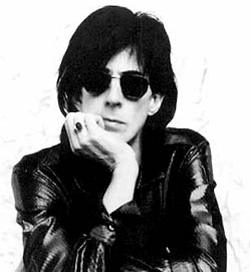


 Ric recently gave an interview with Amazon.com discussing the time consuming effort it took to put The Cars “Unlocked” DVD together. He also discusses amongst other things the possibility of ever playing with his former band again.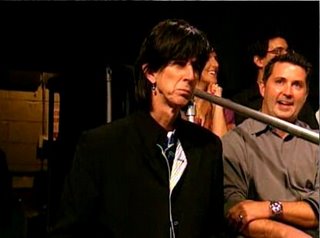
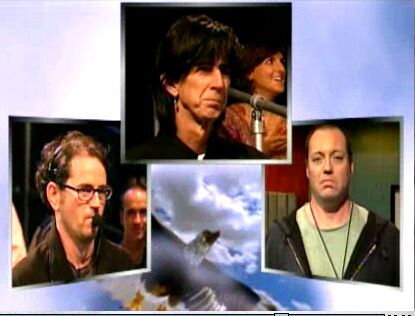


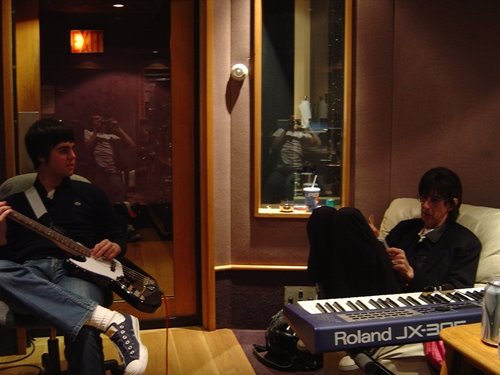
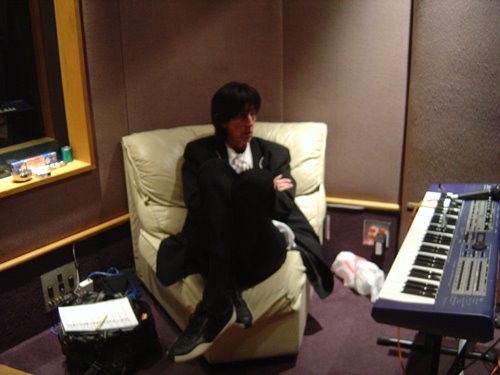


 Ric was out in Los Angeles with Paulina attending a Premiere for Adam Sandlers latest piece of comic predictability "Click". I wouldn't pay dime one to see this and apparently either did Ric.