Monday, February 27, 2006

Ric Excerpt From Weezer Bio Book '"The Rivers Edge"

In the 2004 book "Rivers Edge" written by John D. Luerssen there is an actual chapter entitled The Cars. Although it is 99% about Ric and his dealings with the band during Weezer's Blue Album recording sessions It is chock full of quotes from Ric as well as accolades by Weezer's leader Rivers Cuomo about The Cars. Also provided is an interesting tidbit of what Ric knew about the the firing of original Weezer guitarist Jason Cropper and the adding of their present gutarist Brian Bell.

Here's the entire excerpt from the book "Rivers' Edge: The Weezer Story" that deals with Ric and the Blue Album sessions.

After toying with the notion of self-producing their major-label debut -- which Geffen suits outright objected to -- the band selected Ric Ocasek, former frontman for the multi-platinum rock outfit the Cars. According to Rivers, "The record company was really pushing us to work with a producer, so we figured that if we had to have somebody in the studio with us, it might as well just be someone who writes good songs -- and the Cars' first record just rules. We sent Ric a tape and he called right back and said, 'You guys are great. I want to work with you.'"

"A day later, two days later, the record company called us up and said Ric's coming to your rehearsal today," Sharp recollected. "We were just like, 'Yeah, right, he's coming to our rehearsal.' But that day Pat saw him in a guitar store and he goes, 'Oh my god, maybe he is coming.' So he came to our rehearsal and hung out, and we were all pretty nervous. We'd never really dealt with anybody outside of the band at all."

"I got their demo from Todd Sullivan," Ocasek said over the phone in July 2003. "I had been in L.A. working on another production -- I think the Bad Brains' second album for Maverick -- when he handed it to me. And I remember putting it on in the car and I was driving around and I just flipped out. I just said, 'God these songs are so great.' But I didn't know what the band looked like or anything. I actually thought they were a heavy metal band, because the guitars were kind of heavy on the demo, and the guitars were nice and muddy. I couldn't pinpoint what they were like image-wise. I thought they'd probably be a long-haired band, but at the same time, the lyrics were kind of too intelligent for that. But I really just didn't have a clue. And then I went to a rehearsal while I was in Los Angeles and I was blown away. They were kind of shy but I just loved what they were doing. Once I learned of Rivers' history with heavy metal it made perfect sense. It didn't have metal riffs, but they had real power. And at the time that kind of approach wasn't really available."

During one practice, on August 6th, the band even finalized a cover of the Cars' 1978 smash single "Just What I Needed" in homage to their new producer. A few days later, Rivers, Pat, Matt and Jason flew to New York City to rehearse in the presence of Ocasek at Manhattan's S.I.R. Studios. Here, Ric -- with his assistant Haig and the project's engineer Chris Shaw in tow -- recorded Weezer on a 12-track machine to, as Karl Koch described, "get a feel for the sound of the group and try to narrow down the song selection for recording the album."

"I had them in pre-production for at least a week, trimming it down," Ocasek recollected. "I wanted it to be a concise record that had a focal point. In pre-production they did Cars songs, which I thought was pretty cute."

"When we first met Ric, we were so freaked out by everything," remembered Matt Sharp. "We'd never met anyone famous. We were like, 'Oh my god, what's happening?' It was very hard to look at anybody eye-to-eye. But we milked him for all the Cars stories we could because we were all Cars fans." Cars albums released between 1978 and the band's demise in 1987 have sold a phenomenal 23 million copies so far in the United States alone, according to the Recording Industry Association of America.

"I'd always admired the Cars and Ric Ocasek's songwriting and production skills," enthused Rivers. "I wasn't worried about him handling the band's heavier side. He'd produced Bad Brains and they're a lot heavier than us."

"We picked him . . . scratch that. I picked him because I liked and respected his songwriting," Rivers later said of Ocasek. "What we learned from him is actually kind of boring and technical. Before we met him, we always had our guitars on the rhythm pickup, which has a bassy, dull sound to it. That was the sound we liked at the time. But he convinced us to switch to the lead pickup, which is much brighter. I think when I wrote those songs originally, I was just sitting in the garage by myself and it sounded great when you're all by yourself, because it sounds heavy and bassy. But in the context of the full band, playing at Club Dump, that pickup just sounds really . . . dull. And he got us to brighten it up. It made a huge difference, I think, in the way we sound."

At Ocasek's urging, the band left the comforts of Los Angeles to record in New York City. "[Ric] was saying your first record should be an experience," Sharp said. "You should get away from L.A. and get away from all these people and really just get into the making of a record. His wife [model Paulina Porizkova] was in New York, and she was pregnant, so he couldn't leave so he said, 'Let's go to New York.'"

Fifteen songs were tracked during Weezer's first New York practice session, but four songs -- "Lullaby for Wayne," "Getting Up and Leaving," "I Swear It's True," and an alternate version of "In the Garage" -- were eliminated as contenders for Weezer. A fifth tune from this session, "Mykel & Carli," would be attempted but abandoned only to be recorded the following year when it was relegated to B-side status. For the album, Ocasek and the band came to agreement on ten songs. They were: "My Name Is Jonas," "No One Else," "The World Has Turned and Left Me Here," "Buddy Holly," "Undone -- The Sweater Song," "Surf Wax America," "Say It Ain't So," "In the Garage," "Holiday" and "Only in Dreams."

The actual recording of Weezer's debut got underway at Electric Lady Studios in late August 1993. While in New York, the band stayed on the ninth floor of the Gramercy Hotel on Gramercy Park and as they put work to tape, the "tracking roughs" (or immediate results of their efforts) were put on cassettes for listening and scrutiny at the end of each day.

"The plan was to do a quick record over the span of just three weeks or something," said Ocasek. "The real fun came when we started to record at Electric Lady. That's where the personalities developed and I got to see just how artistic Rivers really was. A lot of times we had little talks about which songs we should do. I remember at one point he was hesitant to do 'Buddy Holly' and I was like, 'Rivers, we can talk about it. Do it anyway, and if you don't like it when it's done, we won't use it. But I think you should try. You did write it and it is a great song.' He was up for doing almost anything. I had a good relationship with him, because I wouldn't make him do anything he didn't want to do. I was just sort of there to guide him."

So, what really went down? Rewind to September 1993 as producer Ocasek remembered the whole ordeal a little differently. "They weren't like a happy-go-lucky band anyway," said Ocasek, who has gone on to man the boards for the likes of No Doubt, Guided By Voices, and Bad Religion. "In the middle of that record he fired the guitar player," Ric divulged. "He called me when the record was finished, the day before we were supposed to start mixing, and said, 'Listen, I just fired the guitar player.' So I said, 'What are you gonna do now?' He's like, 'I want all of his parts off the record.'"

Saturday, February 18, 2006

Ric 2000 Interview Magazine Article


INTERVIEW Magazine , FEBRUARY 2000 ISSUE Interview by Evelyn McDonnell

Ric Ocasek was already a twenty-nine-year-old rock 'n' roll veteran when the 1978 eponymous debut by the Cars went multiplatinum. Six foot two and 150 pounds, the Baltimore native enjoyed a geek's fantasy revenge: He was an early MTV icon and married a model, Paulina Porizkova. Since the Cars crashed in 1988, Ocasek has released the occasional solo record and produced artists including Weezer, Bad Religion, and Guided By Voices.

EVELYN MCDONNELL: Does it seem like thirteen years ago that you were on the cover?

RIC OCASEK: It seems like five, maybe.

EM: Do you miss those days at all?

RO: I don't really, because I'm still involved in music. I don't miss the traveling every day. I don't miss the attention, either. It's nice for a good period of time, then it becomes overwhelming. The good thing about it is that you get a bigger worldview because, well, first you travel the world. And then you get a different perspective about people. Our success lasted quite a good span of time, twelve years of chaos. I like all that insanity. I still look for that.

EM: Not very many musicians make the transition to production. Why did you?

RO: It wasn't really a transition for me; it was just an extension of what I've done since 1980. I had a studio in Boston as early as the second record of the Cars, and I basically lived in the studio. I love the process of making records, of putting down the performances and melodies.

EM: Now you get to watch other bands go through the chaos and insanity.

Ro: Exactly. I feel very sorry for new bands because they don't have the same opportunity that we did. Now they have production companies that write albums and do the music, and the bands come in and sing. I don't even know if they're bands, really. Record companies used to sign a band and say, "Go and do your record, I hope it's cool, If it's not, we'll get it on the next one." Now it's like, "I don't even want to hear a tape unless you have five singles. And if you don't have the five singles, we'll get them for you."

EM: You worked on the upcoming album by Hanson. How much of your observations are based on that experience?

Ro: That was the most interfering that I've ever had. Of course it would be, because they're such a big band. And I didn't even mind. But when I was hired, the premise was, "Now we'd like the Hansons to do their great songs that they've written, and we'd also like them to play a lot on the record," which is different from what they did on the first. And then the A&R person who hired me got fired, and another guy came in and wanted to rehire everybody.

EM: How do you choose records to produce?

Ro: Every week I get about ten tapes from labels and bands, and I go through them and listen for something different and adventurous and good. It doesn't matter if it's signed, unsigned, big label, small label.

EM: You're producing a new record by Bran Van 3000 now. How is that going?

Ro: That's one of the favorite records I've ever done. Jamie Disalvio has a good circle of people. He'll get the Montreal Symphony Orchestra to do two songs and a Cuban flute player from Miami to do one.

EM: It sounds very different from Hanson.

Ro: Totally. The only similarity is the part that I like the least: the Pro Tools part, the computer part. Looking at a TV screen when you're doing music, that just doesn't fit with me. I'd rather have my hands on the faders. I'd rather not be looking at five vocals where one vocal is blue and another one is red and another one is yellow, and which one do you want, the yellow one or the green one. I don't want the yellow or the green one; I just want the one that sounds good.

EM: What's going on in music that excites you, that you think is an improvement since 1987?

Ro: Well, certainly the sound of music on a technical level is a hundredfold better. As far as general music goes, I don't think it's any better than the '50s, because any old Buddy Holly song is as good as any song today.

EM: With all the emphasis on celebrity and videos and charts, do you find that artists aren't paying attention to writing?

RO: Yeah, I do. Performers not only copy music, they copy the way people act. They copy the way people hold their hands, they copy the way people dance, they copy jumping up to the camera and looking into it. Every video is the same.

EM: Strangely enough, I turned on MTV this morning and they were playing the "You Might Think" video, because it's number 25 on their Top 100 Videos countdown.

RO: That won the first [MTV Music Video Award]. So I'm permanently attached to a fly [the video shows Ocasek's head on a fly's body]--people send me flies; I have fly pins. That's what I got out of the whole thing: I became a fly.

EM: You and Paulina have two small children. Do you find it hard to have energy for them?

Ro: No. I still have an incredible amount of energy. It's funny: Mentally you feel the same your whole life. You think when you're twenty or twenty-five that when you're forty-five, you're going to feel like a different person, more mature or something, but damn, I've found that I just don't think any differently. Maybe it's because I'm in this kind of business that I just keep going forward, but I don't think you change. And having kids makes me want to stay in touch. You have to help them along, so you want to just keep going.


Troub


Saturday, February 11, 2006

Ric Interview On Access Magazine.com


One thing you have to acknowledge is that Sanctuary records has done a great job in giving Ric the opportunity to promote his recent Nexterday CD. The plethora of interviews given by Ric far exceed any of the promotion of his own records so far.

So here's another fairly decent online one. The only flaw in this one is that the author claims he was entranced when he heard Ric sing the opening lines of Just What I Needed. Problem is as most of you know that song was sung by the late great Benjamin Orr.

Heres The Link
http://www.accessmag.com/80/theend.php

Troub

Thursday, February 09, 2006

Ric Explective Laden The Wave Magazine.com Article

You remember the saying don't believe everything you read. Well it certainly rings true with Internet Sites that don't have editors and fact checkers like newspapers, magazines and published books have.

As I stumble upon more Ric Internet interviews I often find them basically text that has apparently been parapahrased from numerous credible sites and presented as an original interview by not so credible sites.

The one that appeared recently on The Wave Magazine.com site
is suspiciously a bit askew in my opinion.

Although, it contains information that has already been documented by other sites it has some bit out of character
quotes from Ric.

For Example this one

Now, the ex-Cars leader looks around his own New York abode for a minute and shudders. “My house is a f--king mess, it’s outta hand. I should get rid of 50 percent of this sh-t, like those organizer people on TV.”

It just doesnt sound like Ric to me. It could be but he rarely talks about personal things especially cursing every other word.

Here's another one:

TW: In “Moving In Stereo,” you sang, “Life’s the same, I’m moving in stereo / Life’s the same, except for my shoes.” What was different about your shoes?

RO: Well, you know, shoes are always changing. People never wear the same shoes all the time, so I guess that’s the point of that. But who really knows? It’s some pretty deep sh-t. Everything makes sense when you’re writing.

Him saying that his lyrics aresome deep shit is way out of character at least from almost 30 years of reading his interviews.

What interviewer asks this question ?

TW: Seriously. What the hell were you smoking that day?
RO: Oh, whatever was around. The same things I’m probably still smoking.

I guess the answer is feasible

The final flaw in the interview is Ric's answer about his relationship with Paulina

We’re in good shape, we’re phenomenal.

That Just doesn't sound like something Ric would say.

Hey I could be wrong and the article is 100% valid. But I'm taking this one with a grain a salt. I suggest you should too.

Here's the Link To The entire article

http://www.thewavemag.com/pagegen.php?pagename=article&articleid=25702

Troub


Monday, February 06, 2006

Ric's Guitars Used On Weezers Blue Album


Occasionally something get by me about Ric and for some reason I like that it does. I like learning something new. Apparently when Ric was producing Weezers 1994 Blue Album at Electric Ladyland Studios. Weezer band member and principal song writer Rivers Cuomo had no guitar for the sessions as his custom made model was on order and not ready yet.

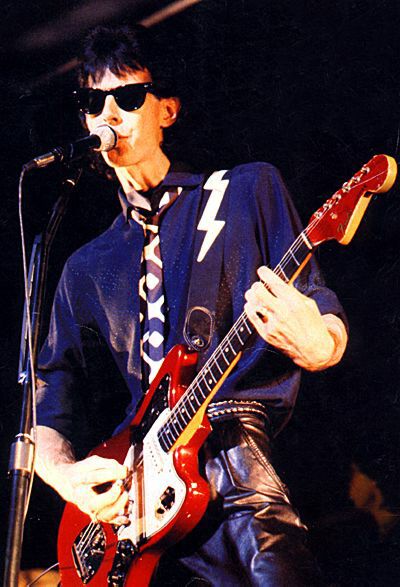
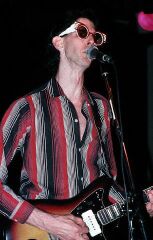
So Ric offered Rivers a pick of his own guitars in his from his own personal collection. Rivers chose a red 60's Fender Jaguar (the same guitar Ric is playing here) , and a 1955 Gibson Les Paul Junior Special, double cutaway.

Both Guitars were used extensivley on the Blue album and Ric's Les Paul Junior Special contributes the sound on the the more crunchier riffs on the album. So the guitar riffs you are hearing on "Buddy Holly" and "My Name Is Jonas" are being played on Ric Ocasek owned guitars.

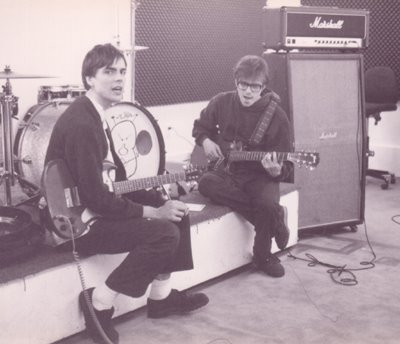
Below is a picture of Rivers Cuomo and Weezer Guitarist Brian Bell Playing Ric's guitars during the Blue Album sessions at Electric Ladyland.


Below is a picture at Electric Ladyland of the two Ric guitars used on Weezers The Blue album. Ric's are pictured on the left and right.


I Just knew those guitars sounded familar !


Troub


Tuesday, January 31, 2006

Ric Appears in The Big Take Over Magazine

Ric appears in this months issue of The Big Takeover Magazine and is interviewed by Jeff Elbel both about Nexterday and his job as head of Inverse.

You can pick the magazine up at Borders and such.

Some high-lites from the article are :

Ric is allowed by Sanctuary to sign a maximum of three bands a year to his own Inverse label.

Carousel which appears on his Nexterday album is not a fresh tune as all the other tracks are. It is actually a Pre-Cars tune that Ric did when he first came to NY as a struggling songwriter.

His passion for receiving Demo Tapes is immense. He says currently has about 500
demos to wade through, and exclaims that Demos are the Best ! "It's like getting a great record a year in advance"

Saturday, January 28, 2006

The Cars and Beatles Producer George Martin

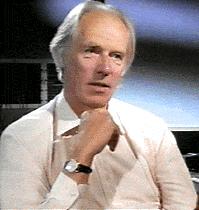
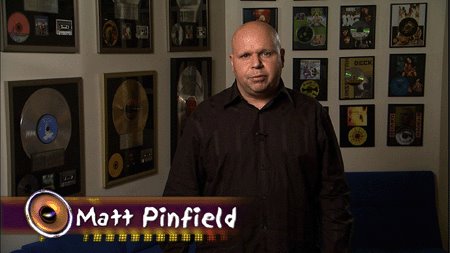
During Ric Ocasek's Interview with Matt Pinfield on his HDNET's Soundoff program Ric revealed a very interesting story that hadn't been documented as of yet . The Cars self-titled first studio album was recorded in a studio owned by famed Beatle producer George Martin. It seems that Martin would poke his head daily on The Cars recording sessions. He also specificly told them "that they "a hit record here" during the studio work on the debut record. The Cars collectivley as a group at the time didn't believe him but gained some confidence in themselves in at least thinking they had potential.

Ric also talked about driving in LA with Roy Thomas Baker and seeing the Cars for the first time on a billboard. Thsi story was covered in the Daily Events Book January 17th entry.

Most importantly Ric said that the Cars Unlocked Documentary is finished and that only titles and credits need to be done to complete the project.

The Program will re-air on January 29th at 4:30 EST

Friday, January 27, 2006

Ric appears on Matt Pinfield's HDNET "Sound Off" TV Show

Ric Ocasek joined HDNETS Matt Pinfield on Pinfield's show "Soundoff".

Both Ocasek and Pinfield have served as A+R guys at major labels. The program will repeat on Sunday January 29th at 4:30 EST.

Tuesday, January 24, 2006

Ric Radio Interview With Rudy Blair 2005

Ric was interviewed a few months ago by Canadian radio host Rudy Blair.

The Negative Theater Troupe has provided you with the downloadable version of the 20 minute or so Interview. The link for the show is provided below.


Ric Ocasek Rudy Blair Interview

Tuesday, January 17, 2006

Roy Thomas Baker Speaks About The Cars Debut

"I remember when the first Cars record hit Number One on the charts, I was driving on Sunset Boulevard with Ric Ocasek. We drove past a billboard for the Cars' record, and he said, "If someone had told me a year ago that I would be driving along Sunset Boulevard with Roy Thomas Baker looking up at a billboard of my record that is Number One, I wouldn't have believed him." Roy Thomas Baker also went on to describe why most tracks he did with the cars have a seemless stream to them.


"I love segues, because I like records to be continuous and it gives me a good excuse not to turn off the music and put on something else. They played the first three or four songs off of The Cars first album' in the beginning because the DJ's at the time kept missing the end of the songs. It worked out well."


"With The Cars, you had this band with a sparse rhythm section and a unique singer in Ric Ocasek, but when the harmonies kicked in, it was a wall of sound. They came at a time when rock radio really needed some freshening up."

I would run into the Sex Pistols, because they were working over at Wessex. They were saying the usual, "All you bands are going to be gone because you're over-produced and you're all fags," and all that. [Laughs] It was really funny. I thought, "Maybe there is a point where I should be a bit more sparse." So when I did the first Cars record, we purposely did it very sparse, but when the harmony vocals come in, there are as many vocals there as there were in a Queen record. The only difference is it was in and then it was gone.

"Good Times Roll" is a classic one for that. When they sing those words, it's huge and then it's gone, and everything is back to sparse again. I was able to put big vocals on a sparse, punkish background, sort of inventing post-punk pop.

Ric Finishes Pink Spiders Album


Ocasek has finished his production work on the Pink Spiders Album and the project is now in the Mastering and post production phase

Monday, January 02, 2006

Ric Appears In Guitar Player Magazine

Get an inside look at what gear Ric used to record "Nexterday" with. Ric also shares his guitar sound techniques in studio.

http://www.guitarplayer.com/story.asp?sectioncode=8&storycode=12245

Ric's Album Nominations For New Pantheon Music Awards 2005

Ric was chosen along with some other music icons such as Elton John, Beck, Dave Matthews and Suzanne Vega to be a nominator for the best album of 2005. Here is the link for Ric's picks. Feel free to browse around and find out what New Pantheon is all about and to also check out some of the eclectic nominators they gathered like Margaret Cho.

http://www.newpantheon.net/folks/nominator.php?id=266

Tuesday, December 27, 2005

Ric Appears In Music Connection Magazine

Ric goes in to extreme detail about his tenure as head of A+R at Warner Brothers Elektra Records Division.

http://www.musicconnection.com/currentissue/feature4/feature4.lcgi

Tuesday, December 20, 2005

12/1/05 Ric Discusses Producing Techniques In Future Music Magazine

  • He syncs together four digital 8-track machines because legendary producer Roy Thomas Baker was a stickler for Tascam tape machines. Ocasek does no hard disk or Pro Tools recording, which is a rarity!
  • For the first Cars album, Baker would have three people singing a part in unison, making them do it over and over again. The band thought it was because they didn't get it right on the first take, but Baker was just layering the vocals.
  • From Baker, he learned "if you want to hear something, you push it all the way up. There weren't any subtle moves with Roy. If you couldn't hear the toms, he'd just jack'em to the top. I think you have to exaggerate whatever you want to pop out in the mix
  • "Recording and mixing guitars is much more about cutting frequencies away rather than adding EQ boosts. I like to get rid of anything that hurts your ears, but I still like the guitars to be powerful. I do try to cut 3 kHz away a lot because I want the vocal to be able to fit in. Whatever I cut away from the guitars, I just put on the vocal to get it to stick out more."
Daily Events Book Page Two